For Korean kimchi for beginners 2026, choose by texture and heat: baechu for classic cabbage, kkakdugi for crunch, or baekkimchi for a red-chili-free style. Start small and read the label.
Quick summary
- Baechu = classic cabbage; kkakdugi = crisp radish.
- Baekkimchi has no red chili pepper sauce, but recipes vary.
- Check ingredients, storage, date, size, and destination rules.
More helpful reads to check
1. Which Korean kimchi is easiest for a first try?
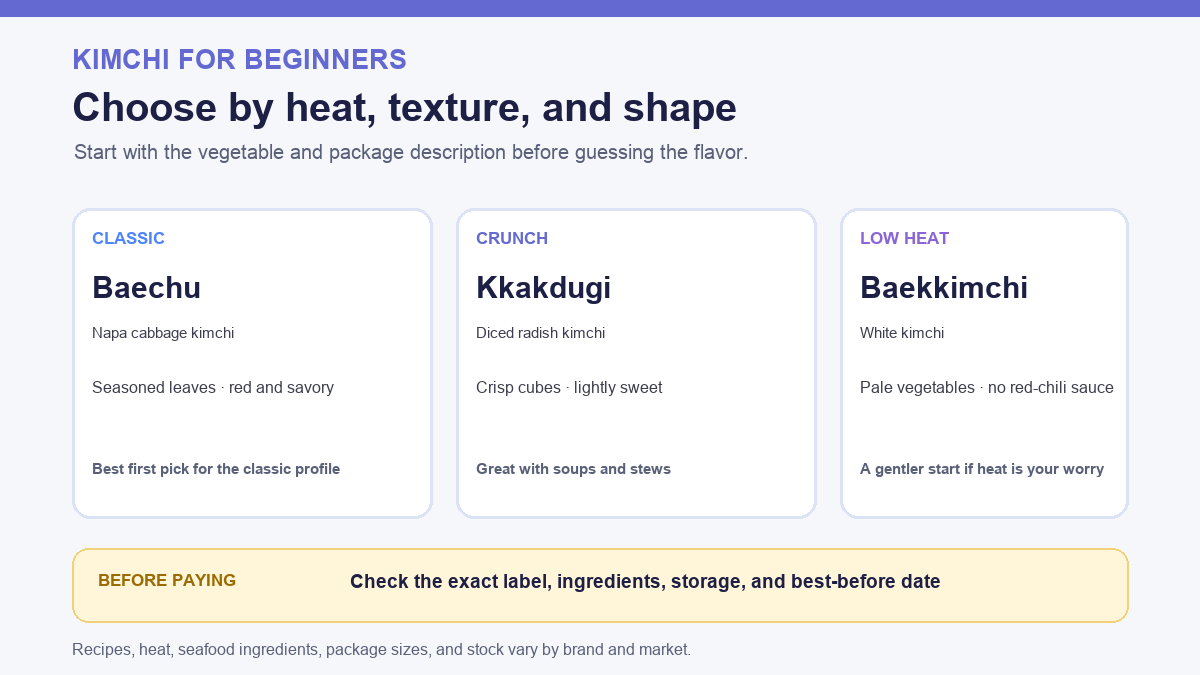
Kimchi type comparison checked September 3, 2026.
For Korean kimchi for beginners 2026, choose by the bite you want: baechu for classic cabbage, kkakdugi for crunch, or baekkimchi for a red-chili-free style.
There is no universal best. VisitKorea describes many regional and seasonal variations, so the label and your own taste matter more than a ranking.
2. How do baechu, kkakdugi, and baekkimchi differ?
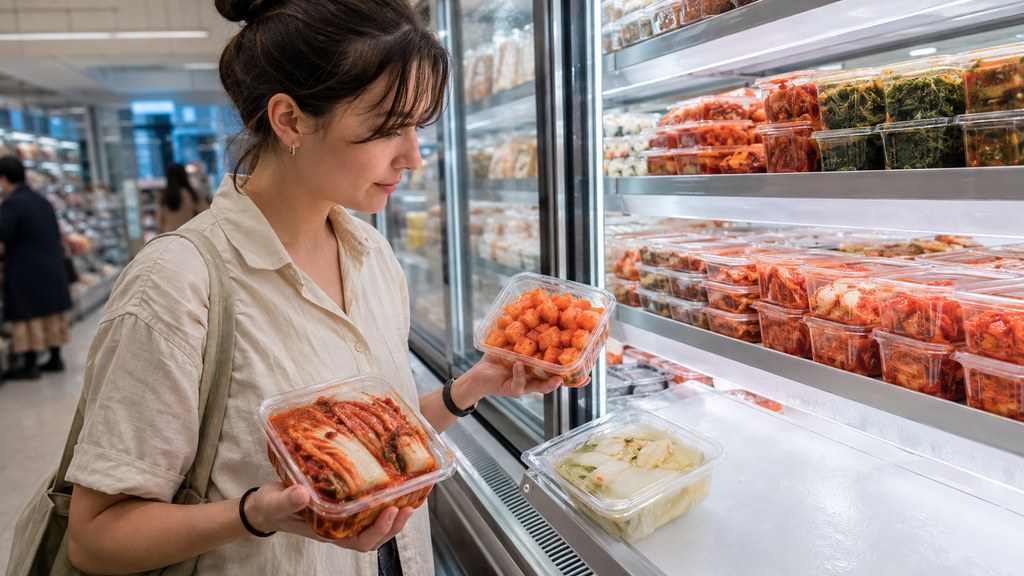
AI-labeled editorial illustration, not a product photograph.
Baechu is the familiar red napa-cabbage style. Kkakdugi uses diced radish for a crisp bite and pairs well with soups and stews.
Baekkimchi is made without red chili pepper sauce. It can be a calmer first step, but ‘mild’ does not guarantee identical ingredients across brands.
3. What should you check on a supermarket label?
Before paying, check four small details on the exact pack:
- Vegetable. Cabbage, radish, cucumber, or another style?
- Ingredients. Read the allergen statement if seafood or plant-based ingredients matter.
- Storage. Follow the manufacturer’s refrigeration guidance.
- Date and size. Compare both before buying a souvenir pack.
Jongga’s English list includes napa cabbage, radish, watery radish, green onion, mustard-leaf, and ripened products. ‘Kimchi’ alone does not identify the vegetable or ripeness.
4. Can visitors buy kimchi to take home?
Visitors can find vacuum-packed kimchi in department stores, supermarkets, convenience stores, and duty-free shops. VisitKorea recommends sealed packs for travelers because they help prevent leaks.
Rules still differ by destination and airline. Keep the label, follow storage guidance, and check the destination authority before packing food.
A/B decision
Classic → baechu · crunch → kkakdugi · less red-chili heat → baekkimchi · flying home → sealed pack plus destination check.
✅ Bottom line
For Korean kimchi for beginners 2026, start small: baechu for classic flavor, kkakdugi for crunch, or baekkimchi for a red-chili-free direction. The package label controls the final details.
FAQ
Q1. Which Korean kimchi is best for beginners?
Baechu is the classic start; choose kkakdugi for crunch or baekkimchi for a red-chili-free style.
Q2. Is baekkimchi always seafood-free?
No assumption is safe. Check the exact ingredient and allergen statement.
※ Facts checked September 3, 2026 against VisitKorea’s English food guidance and Jongga’s current English product pages. Recipes, ingredients, storage, stock, airline handling, and destination rules can change; follow the exact package and official instructions. Body image: AI-labeled editorial illustration.