The cheapest Korea-to-US transfer is the one that delivers the most dollars after every fee and the exchange-rate spread. Compare the receiving amount for the same KRW principal, and check whether the Korean provider, intermediary bank or US bank can deduct a separate charge.
간단 요약
- Compare the final USD received, not only the advertised transfer fee.
- Check the exchange rate, intermediary deductions, speed and refund route.
- Foreign residents may use a designated foreign-exchange bank; limits and proof rules apply.
More helpful reads to check
1. Which costs can shrink the transfer?
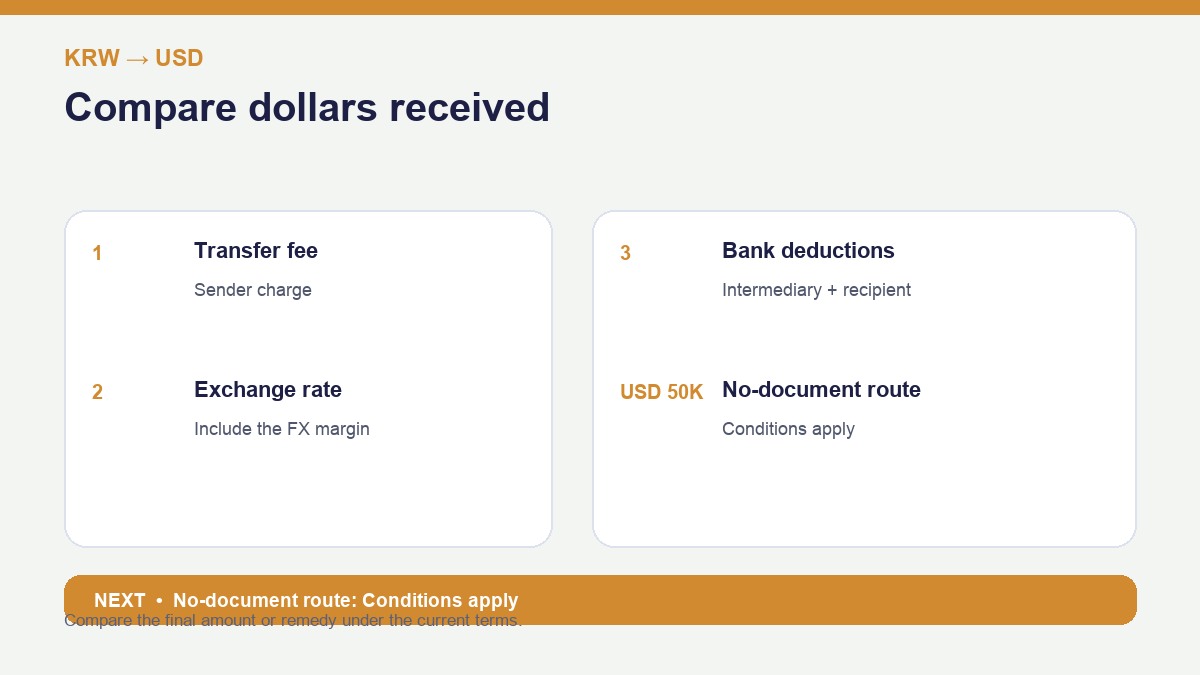
A transfer can include the provider’s fee, exchange-rate margin, intermediary-bank deduction and recipient-bank fee. A “zero fee” offer may still use a less favorable exchange rate or exclude a receiving-bank charge.
2. What should foreign residents check first?
Korea’s Easy to Find, Practical Law explains that foreign nationals may remit up to USD 50,000 per year through a designated foreign-exchange bank without supporting documents, subject to the rule’s conditions. Amounts above the limit or certain source-of-funds situations require supporting documents.
The rule is about documentation and routing, not a promise that every provider accepts every customer or transfer purpose. Ask the bank or licensed provider which ID, residence and source-of-funds documents it needs for your case.
3. How to compare a bank and a transfer provider
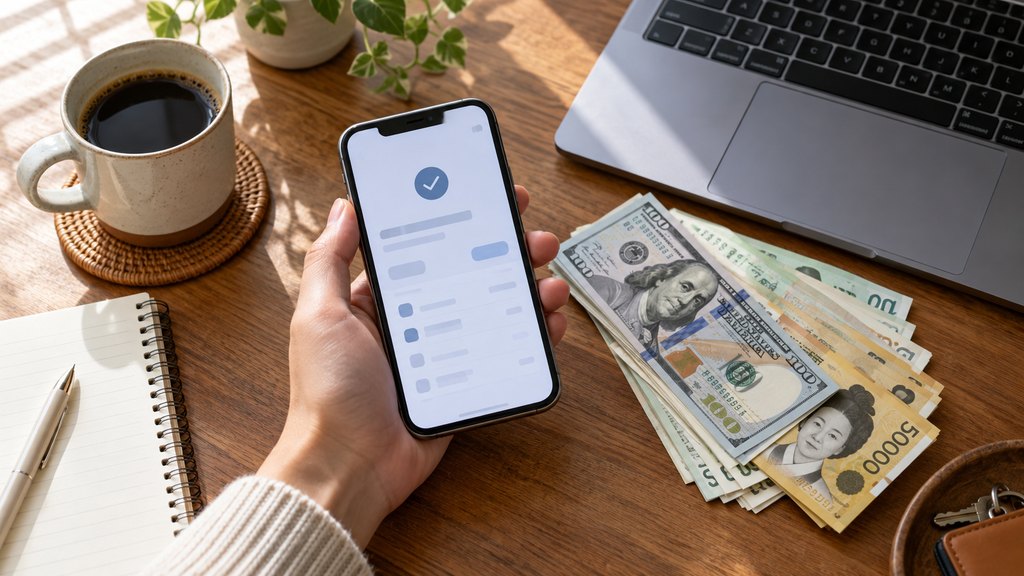
Get a live quote from a bank and at least one provider listed by the Bank of Korea. Enter the same KRW amount, USD destination and delivery method. Record the amount the recipient gets, how long it takes, and whether the quote expires before you can authorize it.
For a large or urgent transfer, confirm beneficiary name, account number, routing/ABA number and SWIFT details directly with the US bank. A typo can trigger a return and another round of fees.
5. Official sources
- Easy to Find, Practical Law: overseas remittance by foreign nationals
- Bank of Korea: licensed remittance system and participants
🌐 공식 사이트 바로가기
✅ 결론
1) Compare final USD, 2) check separate receiving deductions, 3) confirm the transfer purpose and documents, and 4) save the quote and receipt.
FAQ — 자주 묻는 질문
Q1. Is the lowest transfer fee always the cheapest option?
No. Compare the recipient’s final USD after the exchange rate and any intermediary or receiving-bank charges. Use the same amount and destination for each quote.
※ Checked October 1, 2026. Terms can change and vary by person, provider or transaction; confirm the current rule with the linked official source before acting.